Why Does December Always Cost More Than I Planned?
Why holiday spending overshoots, the costs everyone forgets, and a simple one-number budget with a worked example and a free spreadsheet template.
Every year, around Halloween, you make a sensible decision: "$600 on gifts. Tops." Then January arrives, you open the credit card statement, and the number on it looks like it belongs to someone with a boat.
You didn't lose your mind in December. You just budgeted for the presents and then had a holiday, and the holiday has lots of costs that aren't presents. That goes for Christmas, Hanukkah, Kwanzaa, or whatever you celebrate (in NRF's 2026 survey, 91% of adults planned to celebrate at least one winter holiday).
Short version: pick one number for the whole season, from whenever you start shopping (for many people that's well before Thanksgiving, which is November 26 this year) through New Year's. Split it into categories, put every person on a list, write down what you actually spend, and keep a small buffer for the stuff you forgot. Below: why it works, and a free spreadsheet that does the adding.
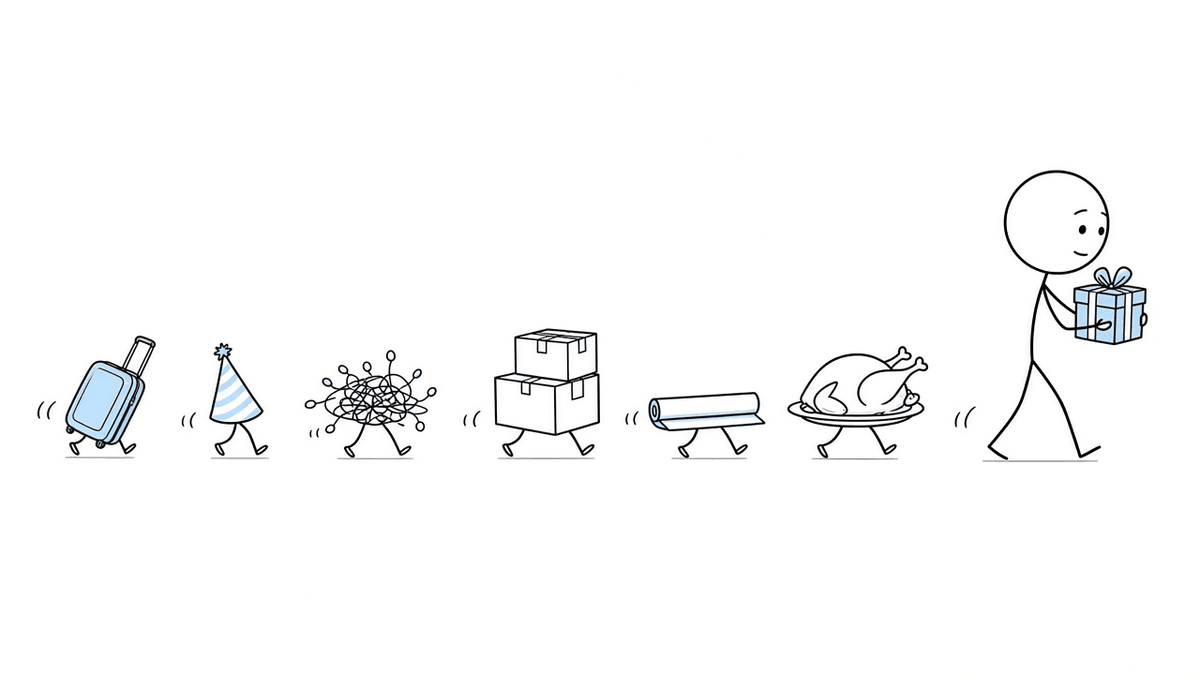
You budgeted for the box. The ducklings came free. (They did not come free.)
The holiday doesn't cost what the gifts cost
When people say "holiday budget," they usually mean "gift budget." December is like a restaurant menu where the prices don't include tax, tip, drinks, or parking. Here's what tends to be left out:
- Travel. Gas, tolls, flights, the dog sitter, the $16 airport sandwich. AAA forecast a record 81.8 million Thanksgiving travelers in 2025, and based on what travelers paid when they booked, a round-trip domestic Thanksgiving flight averaged about $700. (AAA's 2026 forecast isn't out yet.)
- Food and hosting. The turkey, the second grocery run, the wine you bring to someone else's house.
- Wrapping and shipping. Paper, tape, cards, stamps, and mailing a box to your sister, which costs more than what's inside.
- Tips and thank-yous. Teachers, the mail carrier, the babysitter.
- Decorations. Lights that worked last year and have since decided not to.
- Events. The office party, the secret Santa, the ugly sweater you need for the ugly sweater party.
- Charity. The food drive, the toy collection at work.
- Returns. The sweater that didn't fit, and the second sweater you bought before returning the first.
These aren't small. In Deloitte's 2026 holiday survey, the average household expects to spend $1,654 this season: $988 on retail goods (gifts plus non-gift items like décor and hosting supplies) and $666 on holiday activities like travel, events, and hosting at home. That second number is two-fifths of the total, and almost none of it is wrapped.
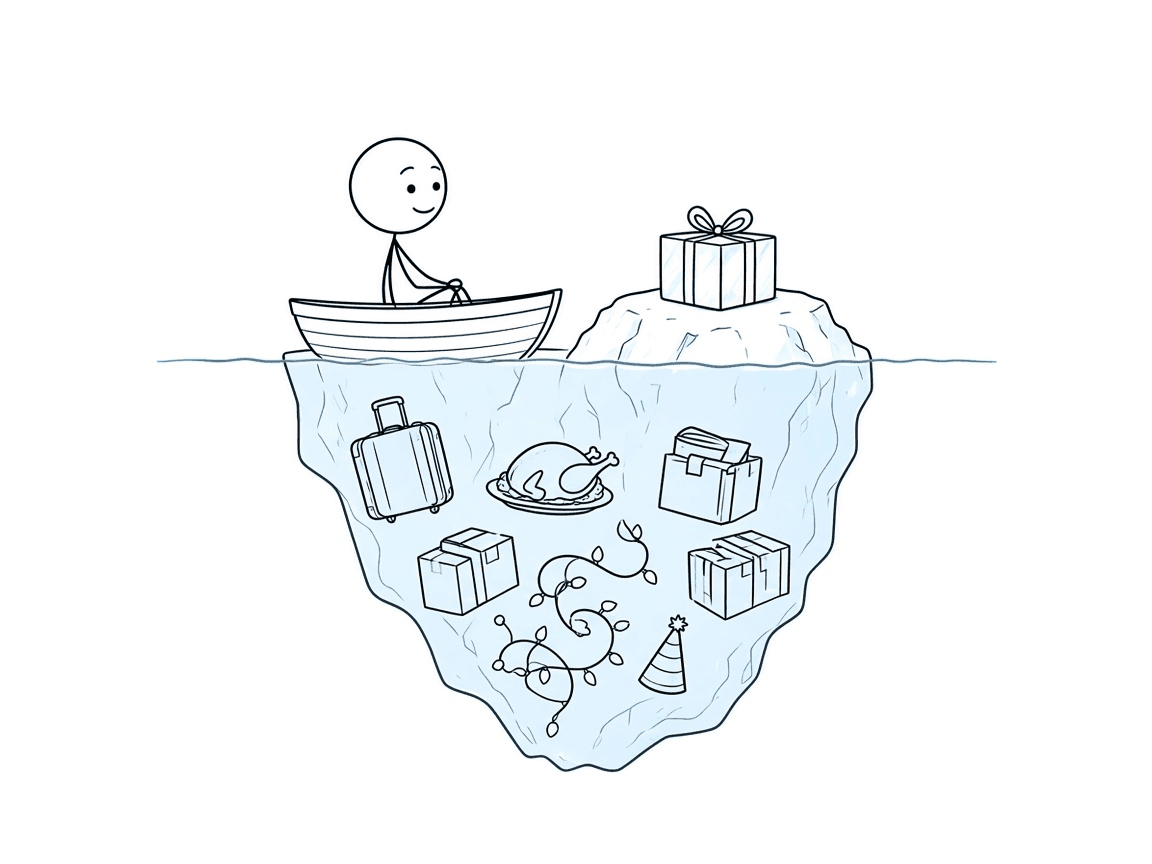 The gift is the part you can see from the boat.
When the hidden part isn't in the plan, it tends to land on a credit card. In a LendingTree survey from December 2025, 37% of Americans said they'd taken on holiday debt, averaging $1,223, and 41% of those were still paying off the previous year's holidays.
Why the plan always loses
This doesn't mean you're bad with money. A few very normal brain habits are working against you.
We plan for the best-case December. Psychologists call it the planning fallacy. In a classic 1994 study, psychology honors students predicted they'd finish their theses in about 34 days on average. It took them about 56. We picture the December where nothing breaks, nobody new joins the family, and the cheap flight is still available. That December has never happened.
Small numbers don't feel like numbers. $12 of wrapping paper, $8 of tape, $19 of shipping. Each is too small to think about. No single one is the problem. Forty of them is.
Most of it doesn't look like "holiday" spending. The extra groceries go on the grocery bill, the gas on the gas bill. Your brain files them under "normal stuff," so they never count against the holidays.
Cards don't hurt. Handing over cash feels like losing something. Tapping a card feels like nothing. In a small 2001 experiment, MBA students bidding on sold-out Celtics tickets offered more than twice as much on average when they had to pay by credit card ($60.64) than when they had to pay cash ($28.51). It was one small study, but if a statement has ever surprised you, you've seen the effect.
Sales are a trap with a bow on it. "40% off" is great for something you were going to buy. For something you weren't, it's 60% of a price you never meant to pay. And the sales now run all season. In NRF's 2026 survey, 43% of holiday shoppers planned to start browsing and buying before November, yet 64% said they're likely to wait until Thanksgiving weekend to do most of their shopping. Early or late, there's a deal waiting.
The fix: one number first
Work top-down. Instead of adding up gifts and hoping, start with the total and make everything fit inside it.
- Pick one total number for the whole season. Not what you'd like to spend, but what you can pay for without carrying a balance into February. If you'd need to borrow to hit the number, the number is too big.
- Split it into categories. Gifts, food and hosting, travel, decorations, cards/wrap/shipping, tips and thank-yous, events and parties, charity, and a buffer. If one gets $0, write the zero on purpose.
- List every person. Everyone you're buying for, with a budget next to each name. If the people add up to more than the gift category, shrink another category, lower some per-person amounts, or have one honest conversation about drawing names this year.
- Track planned vs. actual. Every holiday purchase goes in its category. Not later. Now, in line at the store.
- Keep a buffer. About 5% to 10% of the total, for the thing you'll forget. You will forget something. The buffer just means forgetting doesn't turn into a credit card balance.
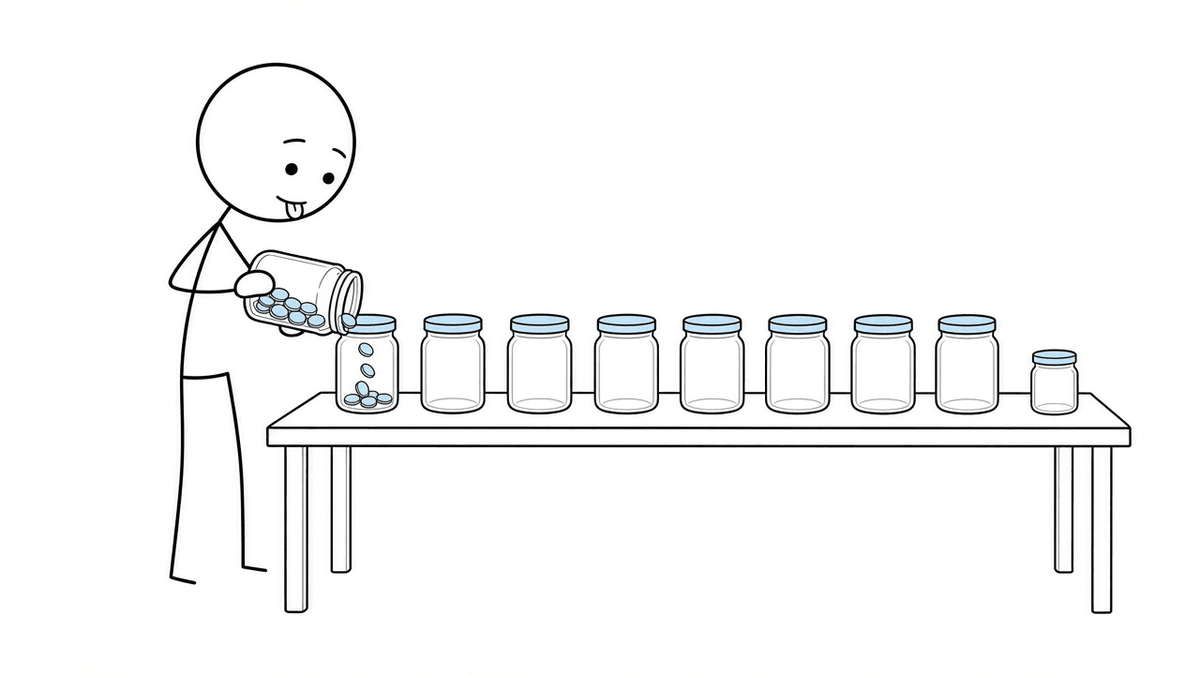 One big jar, eight category jars. The little one at the end is the buffer.
A worked example (made-up numbers)
Every person and dollar amount in this section is made up for illustration. Your numbers will be different.
Meet a made-up family of four. Last year they set a gift budget of $650 and spent $840 on gifts. Not great, not terrible. But the holidays cost them $1,720 in total, because travel, food, shipping, decorations, tips, and the office party were never in the plan.
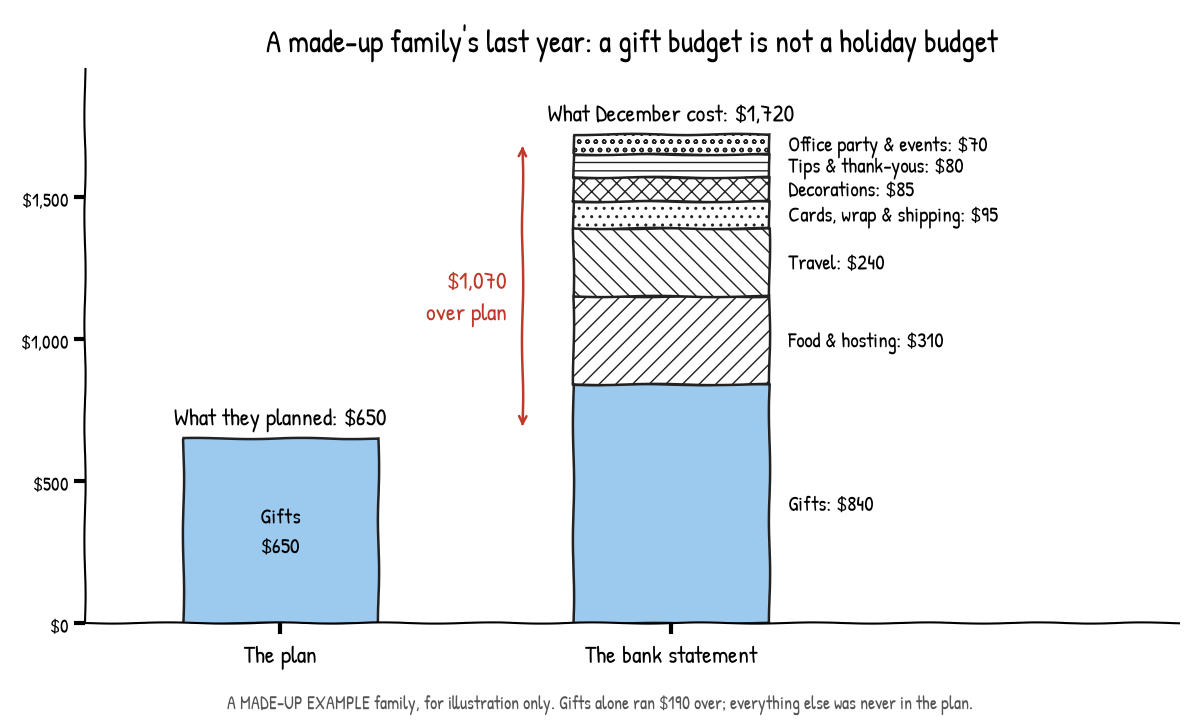 Their gift budget was off by $190. Their holiday budget was off by $1,070, because it didn't exist.
This year, they start with one number: $1,500 for everything. Then they split it:
| Category (made-up example) | Planned | Actual | Left (+) / over (−) |
|---|---|---|---|
| Gifts (10 people) | $650 | $685 | −$35 |
| Food & hosting | $250 | $290 | −$40 |
| Travel | $200 | $185 | +$15 |
| Decorations | $50 | $40 | +$10 |
| Cards, wrap & shipping | $60 | $72 | −$12 |
| Tips & thank-yous | $80 | $80 | $0 |
| Events & parties | $60 | $75 | −$15 |
| Charity | $50 | $50 | $0 |
| Buffer | $100 | covers $77 | +$23 |
| Total | $1,500 | $1,477 | +$23 |
They went over in four categories by $102 and under in two by $25. Net: $77 over, which the $100 buffer covered with $23 to spare. Nothing went on a card that couldn't be paid off in January.
They didn't hit every number. Nobody does. Food ran over because of a grocery run on December 23, the most predictable surprise in America. The plan worked because it had room for being wrong.
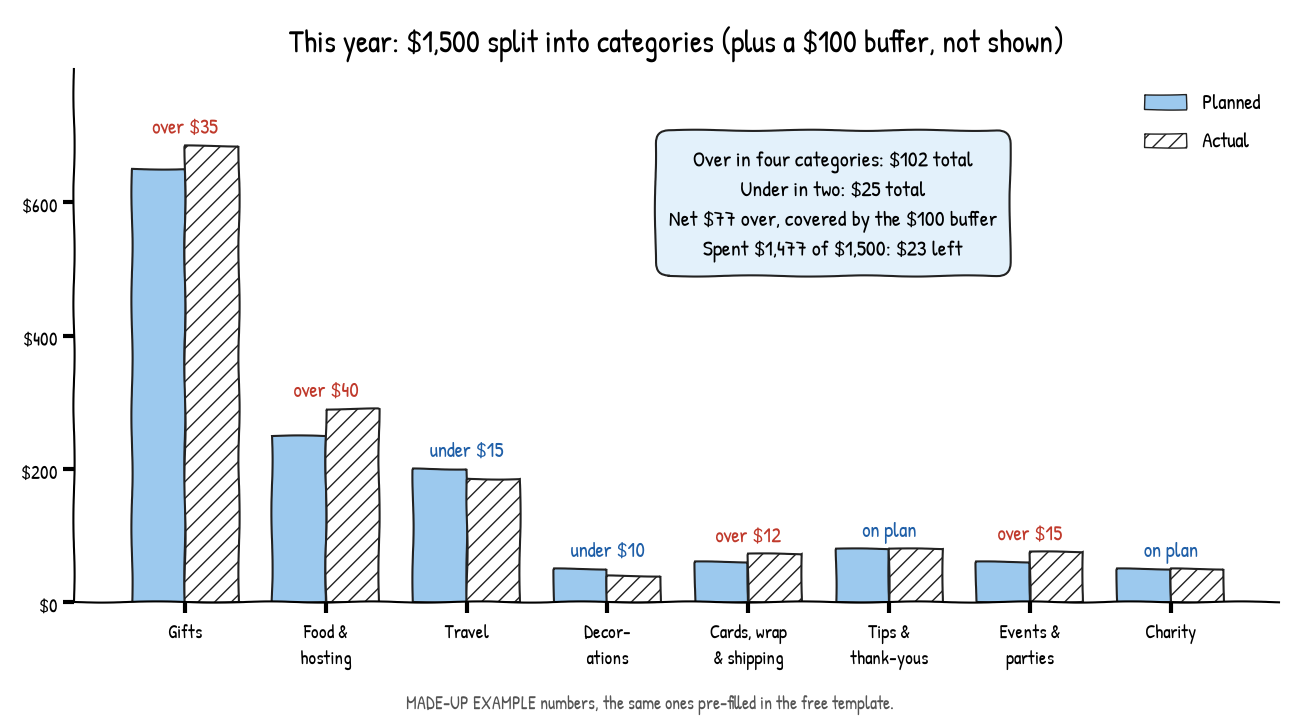 Same family, same December. This time the surprises had somewhere to go.
Be careful with "four easy payments"
Buy now, pay later (BNPL) splits a purchase into a few payments, often four, often with no interest. Used once, for something you'd budgeted, it's fine. The trouble is that it makes a $200 gift feel like a $50 gift, and it's easy to have several going at once.
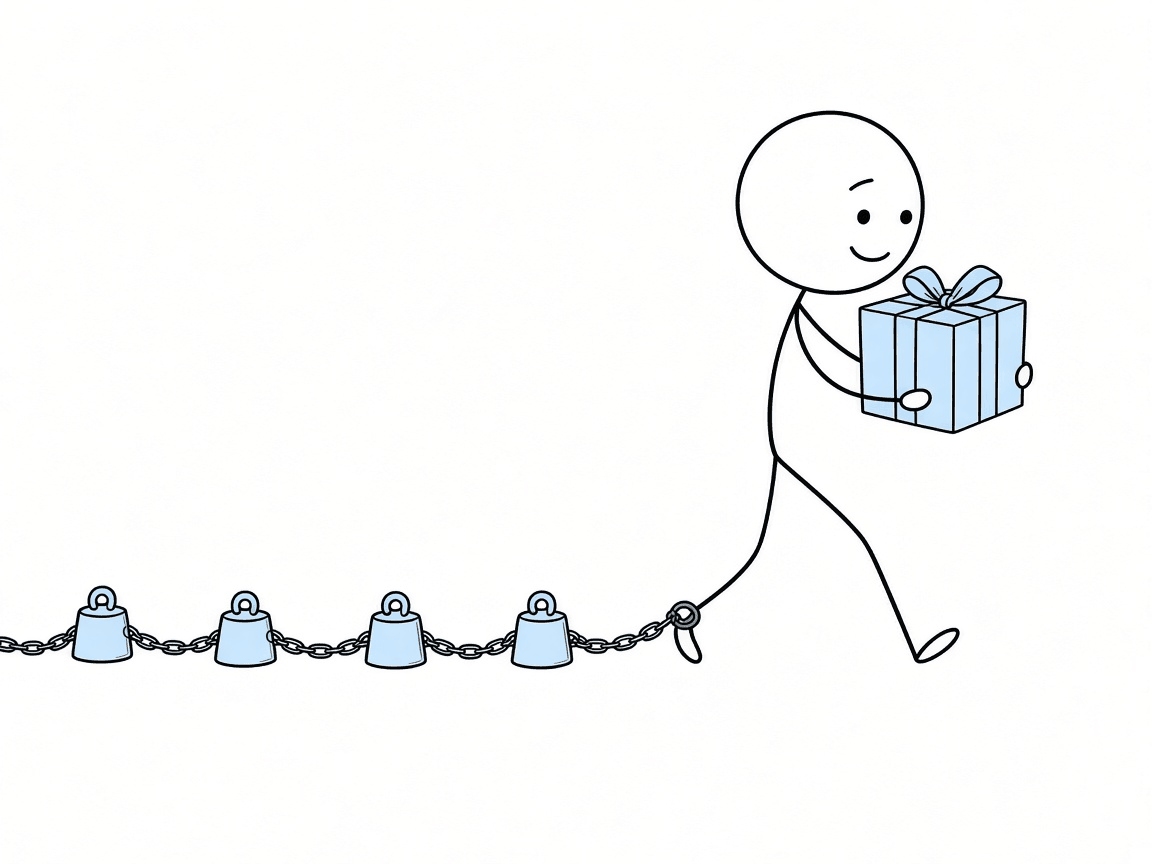 Each one is light. They're all attached to the same ankle.
In the Federal Reserve's survey of 2025, 16% of adults had used BNPL in the past year, and about a quarter of those users (26%) had paid late at least once. When the Consumer Financial Protection Bureau (CFPB) studied 2022 loan data, about 63% of BNPL borrowers had more than one loan going at once at some point in the year. BNPL also comes with thinner protections than a credit card (the CFPB withdrew its 2024 guidance extending card-style rights to it in May 2025).
If you use it anyway, log the full price in your budget on the day you buy, not the first payment. Then write the payment dates on your calendar.
Practical tips that actually help
Use one payment method for the holidays. One card you pay off in full, or cash envelopes by category. The point is that all your holiday spending shows up in one place.
Watch Black Friday and Cyber Monday prices without overbuying. Black Friday is November 27 and Cyber Monday is November 30 this year. Make your list before the sales, with the price you'd pay for each item. During the sales you may cross things off the list, not add to it.
Shipping has deadlines. For delivery by December 25 inside the lower 48 states, USPS recommends sending Ground Advantage and First-Class Mail by December 17, Priority Mail by December 18, and Priority Mail Express by December 19. Missing them can turn a $9 shipment into a $40 one.
Tips have rules too. Postal workers can accept a noncash gift worth up to $20 per occasion (and no more than $50 a year from the same person). A store or restaurant gift card, like a $15 coffee-shop card, is fine. Cash, checks, and Visa-, Mastercard- or American Express-type gift cards are not. Some schools set rules for teacher gifts as well, so check before you buy.
Log returns as money back (a negative amount), and replacements as new spending. A return only helps if you don't spend it on the thing you saw while returning it.
Say the awkward thing early. "We're keeping the holidays smaller this year" is a lot easier to say on November 1 than on December 23.
Start next year's fund in January
The cheapest way to pay for December is a little at a time, starting in January. Divide your total by 12. For the made-up $1,500 budget, that's $125 a month, or about $29 a week. Set up an automatic transfer into a separate savings account, label it "December," and try to forget it exists.
In NRF's 2026 survey, half of the shoppers who start early said they do it to spread out their budget. A holiday fund spreads out the money instead of the shopping.
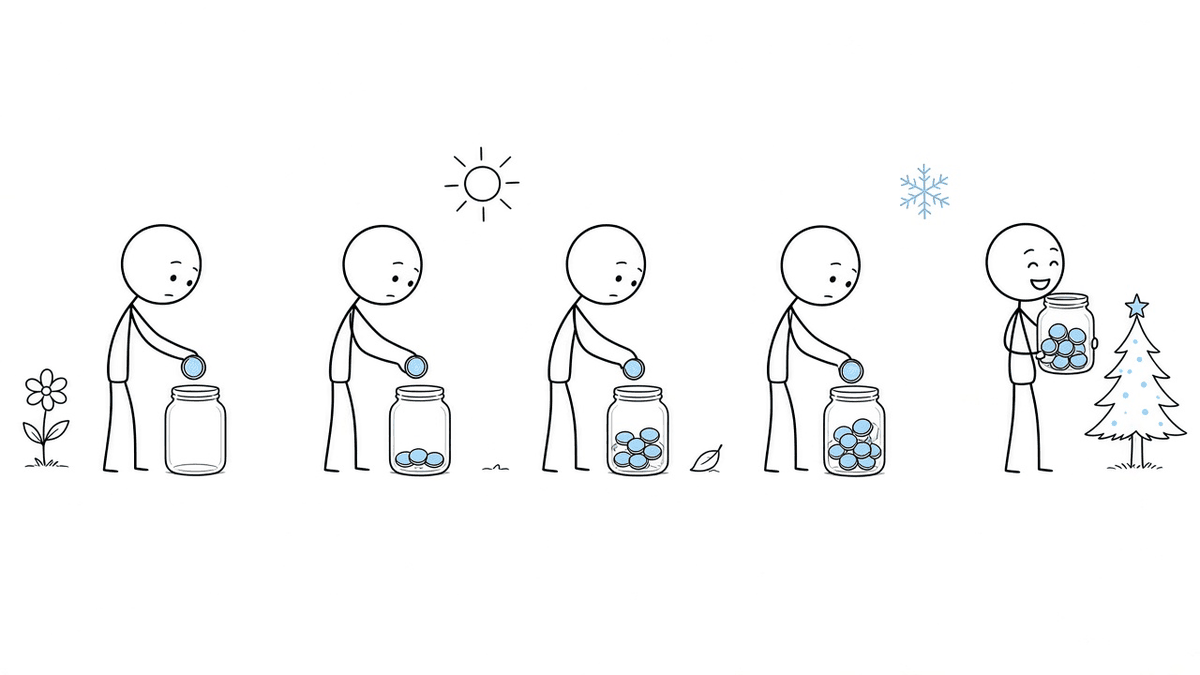 Twelve boring transfers, one relaxed December.
Do it with your own numbers
We made a free spreadsheet that does all the adding: holiday-budget-template.xlsx. It has your total budget at the top, categories with planned, actual, and difference columns, a gift list by person (idea, budget, actual, bought?, where), a spending log for everything else, and a summary that shows whether you're over or under and how much buffer is left. It comes filled in with this post's made-up example (in blue), so you can see how it works before you type over it.
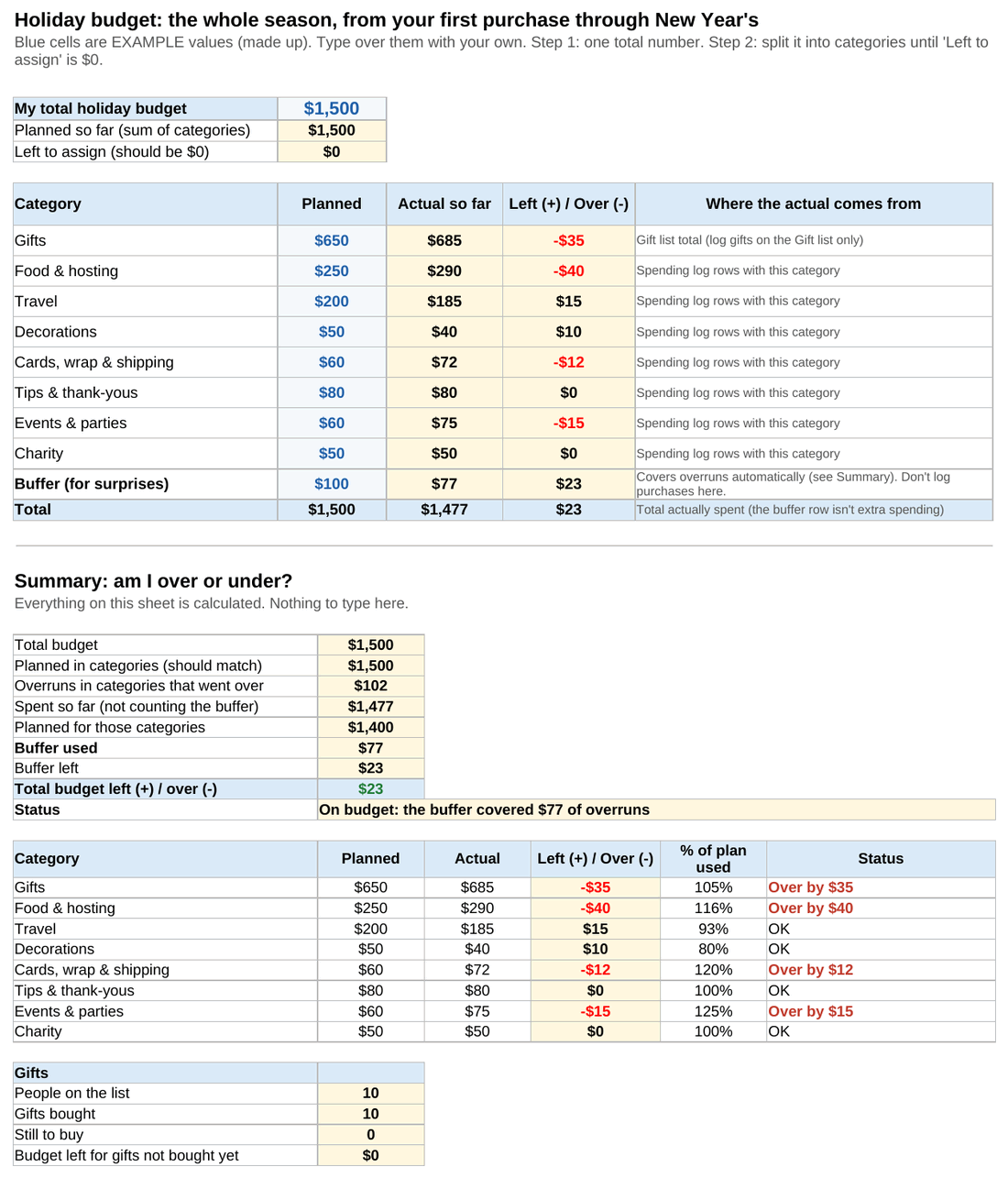 The template, filled with made-up example numbers. Overwrite the blue cells.
You don't need Excel. You can open the file in your browser with the EditDocx editor, fill it in, and download it again. There's no signup, and the file stays on your computer instead of being uploaded. (It also works in Excel, Google Sheets, or LibreOffice.) More on how that works in How to Edit XLSX Spreadsheets Online.
FAQ
How much should I budget for the holidays?
There's no right number, only an affordable one: what you can pay off when the January statement arrives. For context, Deloitte's 2026 survey puts average planned household spending at $1,654. NRF's latest per-person estimate is $890.49, for 2025; it didn't publish one for 2026. Averages are not targets.
What's a good size for the buffer?
Around 5% to 10% of your total. In the made-up example, $100 out of $1,500 (about 7%) covered $77 of overruns. If last year ran way over, start at the higher end.
Should I put holiday shopping on a credit card?
It's fine if you pay the full balance when the bill comes. It's a problem if you carry one: in LendingTree's survey, 40% of people with holiday debt were paying 20% interest or more.
Is buy now, pay later a bad idea?
Not always, but it's easy to stack up. If you use it, budget the full price the day you buy, keep it to planned purchases, and make sure your checking account can cover every automatic payment.
General information, not financial advice.
Sources
- National Retail Federation: NRF Forecasts 2026 Holiday Sales Growth as Consumers Remain Resilient (October 15, 2026); Affordability Shapes Winter Holiday Shopping, According to NRF Holiday Survey (October 20, 2026); Winter Holiday FAQs (why there's no 2026 per-person figure); Consumers to Spend Second-Highest Amount on Record (October 16, 2025; the $890.49 per-person figure for 2025)
- Deloitte, 2026 Holiday Retail Survey and press release (October 15, 2026; survey of 4,000 US consumers, August 26 to September 10, 2026)
- LendingTree, Holiday Debt Hits $1,223 as Tariffs Push 45% of Americans to Cut Back on Gifts (December 22, 2025; survey of 2,032 US consumers, December 10 to 15, 2025)
- Federal Reserve Board, Economic Well-Being of U.S. Households in 2025: Credit (May 2026)
- Consumer Financial Protection Bureau, CFPB Research Reveals Heavy Buy Now, Pay Later Use Among Borrowers with High Credit Balances and Multiple Pay-in-Four Loans (January 13, 2025; full report PDF); Withdrawn guidance list (BNPL interpretive rule withdrawn May 12, 2025)
- AAA, Nearly 82 Million Americans Projected to Travel over Thanksgiving (November 17, 2025)
- U.S. Postal Service, Postal Service Recommends 2026 Holiday Mailing and Shipping Dates (September 22, 2026); USPS Employee News, As the holidays near, here's a reminder about gifts (December 3, 2024)
- Buehler, Griffin & Ross, Exploring the "Planning Fallacy": Why People Underestimate Their Task Completion Times, Journal of Personality and Social Psychology (1994)
- Prelec & Simester, Always Leave Home Without It: A Further Investigation of the Credit-Card Effect on Willingness to Pay, Marketing Letters (2001)
Image credits
All illustrations, charts, and the template screenshot in this post are original.